Left Off the Map: Why Rural Britain Can't Get a Foothold on r/place
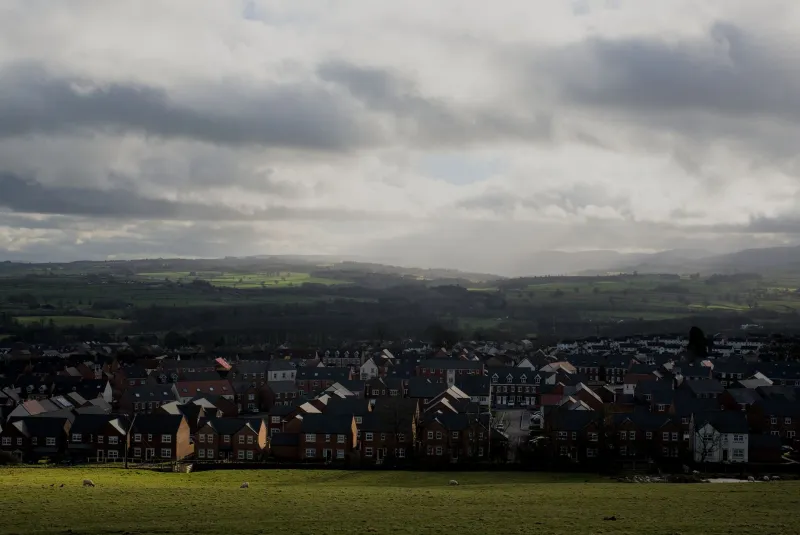
Somewhere in the middle of a recent r/place event, a group of around forty people from a small market town in the East Midlands spent three days defending a patch of canvas roughly the size of a postage stamp. They had a Discord server, a rota, and more determination than anyone had a right to expect. By the end of the event, their artwork had been overwritten twice, partially restored once, and ultimately swallowed by a sprawling banner representing a city with a population roughly thirty times larger.
Nobody outside their Discord noticed. Nobody wrote about it. The final canvas gave no indication they had ever been there.
This is not an unusual story. Across r/place events, a pattern has repeated itself with uncomfortable consistency: the bigger the city, the better the outcome. London, Manchester, Birmingham — communities anchored in major urban centres arrive with infrastructure, numbers, and experience. Rural Britain, and much of small-town England, Wales, Scotland and Northern Ireland, shows up with enthusiasm and leaves with very little to show for it.
The Numbers Game
At its most basic, r/place is a game of scale. More active participants means more pixels placed per minute, which means better territorial defence and faster recovery when rival communities overwrite your work. A subreddit with 200,000 members will almost always outlast one with 2,000, regardless of how organised or passionate the smaller group might be.
Urban communities have a structural advantage here that goes beyond raw population. Cities generate larger online communities around local sports teams, cultural institutions, universities, and nightlife scenes. These communities come pre-organised, with existing Discord servers, social media followings, and — crucially — experience coordinating large groups of people online.
"It's not that rural communities are less creative or less motivated," says one coordinator who ran a small r/place campaign for a coastal town in Devon. "It's that we're starting from scratch every time. There's no pre-existing infrastructure. We have to build everything from zero, and by the time we've got a hundred people signed up, a city campaign already has ten thousand."
The Visibility Spiral
There's also a compounding effect that makes the gap harder to close over time. Successful r/place campaigns generate content — streamers cover them, subreddits celebrate them, articles get written. That coverage attracts new participants for the next event, which makes the campaign more successful, which generates more coverage. It's a visibility spiral, and it strongly favours communities that were already large enough to succeed in the first place.
Rural campaigns, by contrast, rarely reach the threshold of visibility that would bring in outside support. "We had a lovely piece of pixel art," says a coordinator who organised a campaign for a village in rural Wales. "Really carefully designed, a lot of local meaning. But if you weren't from there, you'd have no idea what it was or why it mattered. No one covered it. No one came to help. We just quietly disappeared off the canvas."
The Welsh dimension adds another layer of complexity. Welsh-language communities and specifically Welsh regional identities — as distinct from a generalised 'Welsh' flag — face the double disadvantage of being both geographically dispersed and culturally underrepresented on platforms that skew heavily toward English-speaking, urban demographics.
Strategies That Sometimes Work
Not every small community gives up. Some have found creative workarounds that occasionally punch above their weight.
Coalition-building is perhaps the most effective strategy: reaching out to other small communities, forming alliances, and negotiating shared canvas space. It requires diplomacy and trust, and it doesn't always hold together under the pressure of active canvas events, but when it works it can give smaller groups a fighting chance.
Others have focused on positioning — finding corners of the canvas that larger communities are less interested in contesting, or negotiating explicitly with neighbouring groups to establish buffer zones. It's defensive and somewhat unglamorous, but it's pragmatic.
"You have to be realistic," says a coordinator who has run campaigns for a small Scottish town across multiple r/place events. "You're not going to get prime canvas real estate. You're not going to be in the centre of anything. But if you're clever about where you plant your flag, you can survive. And surviving is its own kind of victory."
What the Canvas Reflects
It would be easy to frame this purely as a problem with r/place — a quirk of game mechanics that accidentally disadvantages certain communities. But the more you look at it, the more the canvas starts to feel like a fairly accurate map of existing offline inequalities.
Rural Britain has long struggled with infrastructure gaps, funding shortfalls, and a sense of being overlooked by institutions and media that default to urban perspectives. Broadband connectivity — still patchy in many rural areas — affects who can participate in fast-moving online events in the first place. The digital divide isn't just metaphorical here; it's literal.
The communities that dominate r/place are, broadly speaking, the same communities that dominate cultural conversation more generally: young, urban, digitally fluent, and well-connected. The communities that struggle on the canvas are often the same ones that feel left behind in other contexts too.
"r/place didn't create this problem," reflects the Devon coordinator. "It just made it really visible. There's something almost useful about that, even if it's frustrating to be on the wrong side of it."
The Case for Paying Attention
For all the frustration, there's a genuine argument that the struggle of rural communities on r/place is worth documenting and taking seriously — not just as a curiosity, but as a data point in a much larger conversation about who gets to participate in digital public life and on whose terms.
When a small town spends three days defending a postage stamp of canvas and loses anyway, that's not just a story about pixels. It's a story about belonging, about visibility, about the quiet exhaustion of communities that keep showing up even when the system isn't built for them.
They were there. Even if the final canvas doesn't show it.
