Locked Out of the Canvas: The Disabled British r/place Fans Being Left Behind
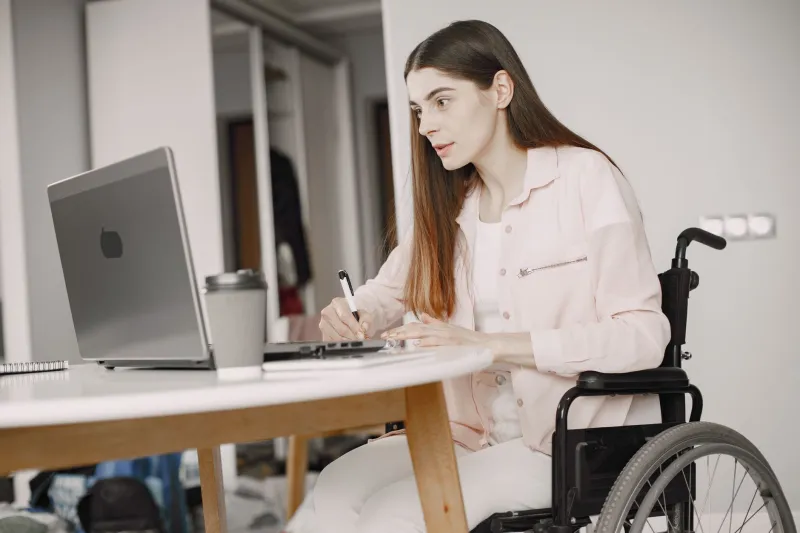
There's a particular kind of frustration that comes from watching something you love from the outside. For Maisie, a 24-year-old from Sheffield who has cerebral palsy affecting her fine motor control, r/place is exactly that kind of experience. She can see the canvas. She can follow the drama. She can cheer on communities she cares about. What she can't always do is place a pixel where she actually wants it.
"My cursor drifts," she explains. "By the time I've lined it up and clicked, the cooldown's already started and I've placed it two rows above where I meant to. It sounds like a small thing but it adds up. You feel like you're contributing noise, not art."
Maisie isn't alone. Across the UK, a significant number of disabled and neurodivergent r/place enthusiasts describe a shared experience: the event is thrilling to witness, but genuinely painful to participate in. And the barriers aren't always obvious to those who don't face them.
What the Cooldown Timer Actually Does to People
For most users, r/place's cooldown mechanic — the enforced wait between placing one pixel and placing the next — is a design feature. It's meant to level the playing field, slowing down bots and preventing any single person from dominating the canvas. In theory, it's democratic. In practice, for many disabled users, it introduces a punishing cycle of pressure.
Dan, a 31-year-old from Coventry with ADHD and anxiety, describes the timer as "almost deliberately designed to trigger me." The countdown creates a compressed window of urgency, followed by enforced inactivity, followed by another burst of pressure. For someone whose brain already struggles with time perception and impulse regulation, it's less a fun game mechanic and more a stress loop.
"You spend the cooldown period anxious about whether you'll get the right spot when it ends," he says. "And then when it does end, everything goes wrong anyway because the canvas has shifted or someone's already overwritten what you were building. It's exhausting in a way that's hard to explain to people who don't experience time that way."
Accessibility consultant Priya Nair, who works with digital platforms across the UK, points out that this kind of design is rarely malicious — but that doesn't make it neutral. "When you build a mechanic around speed and precision without thinking about who that excludes, you've made a choice," she says. "Developers don't always realise they're designing for a default user who has full dexterity, no sensory processing differences, and a neurotypical relationship with urgency. That's a very specific kind of person."
The Precision Problem
Beyond timing, there's the fundamental challenge of pixel-perfect placement. r/place operates on a grid where individual squares are small, tightly packed, and require reasonably precise cursor control. For users relying on alternative input devices — eye-tracking software, switch access, adapted keyboards — the standard interface can be genuinely unusable.
Jamie, a 19-year-old from Glasgow who uses a head mouse due to a spinal condition, spent the last r/place event mostly watching streams rather than participating directly. "I tried," he says simply. "But the zoom level you need to place accurately doesn't play nicely with how my setup works. I'd have to zoom in so far that I couldn't see the bigger picture anymore, and then I'd lose track of where I was. In the end it was just easier to watch."
This shift from participant to spectator is one that accessibility researchers flag as significant. There's a meaningful difference between enjoying r/place as entertainment and being able to contribute to it as a community member. When the latter becomes inaccessible, it changes the nature of the experience entirely.
Community Workarounds and Why They're Not Enough
Some British r/place communities have tried to find their own solutions. Certain Discord servers have developed roles specifically for members who struggle with direct participation — people who can contribute to strategy, colour-matching discussions, or coordination without needing to place pixels themselves. It's a genuinely thoughtful adaptation, and the communities doing it deserve credit.
But it's also, as Priya Nair notes, a workaround for a structural problem. "Community goodwill is lovely, but it doesn't fix the platform," she says. "It means disabled people are being accommodated through extra labour from volunteers rather than through design that works for them from the start. That's backwards."
Maisie echoes this. She's grateful for the communities that have tried to include her, but she's clear about what inclusion actually looks like. "Being told 'you can help us plan' is nice. But I want to place pixels. That's the whole thing. That's what makes it r/place."
What Would Actually Help
So what would genuine accessibility look like for something like r/place? We put the question to a handful of experts and enthusiasts, and the answers were more practical than you might expect.
Larger click targets and adjustable zoom that doesn't break the interface would help users with motor impairments. A less punishing cooldown experience — or at minimum, clearer visual and audio cues around the timer — could reduce anxiety for neurodivergent users. Better compatibility with assistive technology, including screen readers and alternative input devices, would open the door for users currently locked out entirely. None of these are revolutionary asks. They're standard considerations in modern accessibility design.
Dan would settle for something simpler in the short term: "Just tell me what I'm clicking on before I click it. A tooltip, a coordinate display, anything. Give me more information so I can compensate for the things my brain does. That's all I'm asking."
The Bigger Picture
r/place is, at its heart, about collective human expression. It's one of the internet's most compelling experiments in what happens when millions of people try to make something together. British communities have thrown themselves into it with particular enthusiasm — organising, coordinating, celebrating.
But collective expression only means something if the collective actually gets to participate. When disabled and neurodivergent people are systematically filtered out — not through malice, but through thoughtlessness — the canvas stops being a true reflection of who we are. It becomes a reflection of who the platform was designed for.
Maisie has a single pixel she successfully placed during the last event. It's somewhere in a flag she'll probably never be able to identify. She doesn't know exactly where it is. But she knows it's there.
"That one pixel cost me about forty minutes," she says. "I'm not telling you that to be dramatic. I'm telling you because it shouldn't have to be that hard. It should be one pixel at a time. That's the whole point, isn't it?"
It is. And until the platforms, the communities, and the culture around r/place take accessibility seriously, that point is only being made for some of us.