Museum Piece: Why Britain's Cultural Institutions Are Taking r/place Seriously at Last
There's a version of this story where a curator walks into a meeting, opens a laptop, points at a screenshot of millions of tiny coloured squares, and watches every head in the room tilt in confusion. That version happened. Quite a lot, apparently.
But something has shifted. Slowly, sometimes reluctantly, a handful of UK museums and cultural heritage bodies have started paying genuine attention to r/place — not as a quirky footnote in a digital trends report, but as a primary source. A document. Something that tells us, in vivid and chaotic detail, what people in the early 21st century actually cared about when they thought no one important was watching.
What Makes a Canvas an Artefact?
The question sounds philosophical, but it's really quite practical. Museums exist to preserve things that matter. For centuries, that meant physical objects — pottery, paintings, manuscripts, the odd Roman sandal. The digital age complicated everything. How do you curate something that has no physical form, was made by millions of anonymous contributors across dozens of countries, and existed in its original state for only a few days?
For some in the heritage sector, r/place sits in an awkward middle ground. It's too recent to feel historical, too messy to feel artistic, and too internet-native to slot neatly into existing frameworks. But that discomfort, several professionals argue, is precisely why it deserves attention.
"The things that challenge our categories are usually the things most worth preserving," says one digital collections specialist at a major regional museum in the north of England, who asked not to be named while their institution's policy on born-digital acquisitions is still being formalised. "r/place is genuinely unprecedented. There's nothing else quite like it in the archive of human creative expression."
The British Fingerprint
For UK institutions specifically, r/place offers something that conventional collections have historically struggled to capture: evidence of contemporary, everyday British culture in the act of forming itself.
Traditional museum collections tend to skew toward the exceptional — great artists, significant events, powerful individuals. What r/place documents is something murkier and arguably more interesting: collective taste, group negotiation, the things ordinary people chose to fight for when given a blank canvas and a limited number of moves.
And British communities, it turns out, fought for a fascinatingly eclectic mix of things. Regional football clubs. Niche TV shows. Local landmarks that would mean nothing to anyone outside a fifteen-mile radius. Beloved internet memes with deeply specific cultural resonance. The Union Jack, yes — but also the flags of Wales and Scotland, often placed there by communities explicitly pushing back against the assumption that "British" means "English".
"That tension is documented in the pixel data in a way it almost never is in formal archives," notes a researcher working with a digital humanities project at a Scottish university. "You can see the negotiation happening in real time. That's extraordinary."
The Preservation Problem
Of course, wanting to preserve r/place and actually doing it are very different challenges. The canvas itself is ephemeral by design — Reddit hosts timelapses and final snapshots, but the raw pixel-by-pixel history, including every overwrite and territorial dispute, requires significant technical infrastructure to capture and store.
Several independent archivists have stepped into that gap, building their own tools to scrape and store the data before it disappears. But independent archivists don't have the resources, the permanence, or the institutional weight of a national museum. Hard drives fail. Funding dries up. People move on.
The British Library, which has a legal deposit remit covering certain categories of UK web content, has been cautious about staking a public claim on r/place data — understandably so, given the international nature of the platform and the genuine complexity of ownership questions around crowdsourced creative work. Who owns a pixel placed by a user in Manchester that was immediately overwritten by someone in Seoul?
These are not easy questions. But some in the sector argue that the difficulty of the questions is not an excuse for inaction.
"Every year we wait, we lose context," says one archivist who has spent the better part of three years documenting UK community participation in r/place events. "The participants remember. The Discord servers still exist, for now. But communities dissolve, people leave the internet, memories fade. The window for capturing this properly is not infinite."
A New Kind of Exhibit
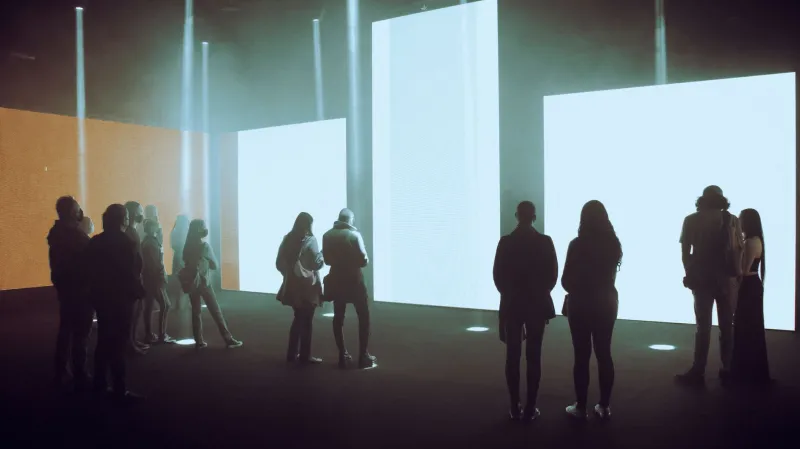
A few institutions are beginning to experiment with what engagement with r/place might actually look like in practice. One regional gallery in the Midlands has been quietly developing a pilot digital display exploring the history of internet collaborative art, with r/place as a central case study. The project is still in early stages, and organisers are keen not to overstate its ambitions, but the fact that it exists at all feels significant.
The challenge of exhibition is not just technical but interpretive. How do you explain r/place to someone who has never encountered it? How do you convey the speed, the pressure, the community dynamics that gave each pixel its meaning? A static screenshot loses almost everything. A timelapse helps, but strips away the human stories underneath.
Some curators are looking at oral history methods — recording testimony from participants, coordinators, and streamers who were present during key moments — as a way of building the interpretive layer that the visual data alone can't provide. Others are exploring interactive formats that let visitors place their own pixels, simulating the experience in a controlled environment.
"It has to be experiential," argues one digital curator who has been consulting on several such projects. "If you just show people a picture of the final canvas, they'll think it's wallpaper. You have to make them feel what it was like to be in the middle of it."
Why This Matters Beyond the Canvas
There's a broader argument lurking beneath all of this, and it's one that the more forward-thinking voices in UK heritage are starting to make explicitly. If institutions fail to engage seriously with phenomena like r/place, they risk becoming irrelevant to the cultural lives of younger generations — people who grew up online, who form communities digitally, and whose most meaningful shared experiences often exist in spaces that traditional museums have never thought to look.
The pixel archaeologists, as some have taken to calling themselves, are working against that irrelevance. One canvas at a time, they're making the case that the history of who we are online is history worth keeping.
And honestly? Given what r/place has revealed about solidarity, conflict, creativity, and the very British instinct to argue passionately about something that probably doesn't matter and then do it anyway — they might just have a point.